Determining the Costs of Language Discordance in Health Care
Editorial by Dr. Richard D. Brecht
This piece is one of several that explore the deep societal, cultural, and human consequences of language suppression in the U.S., framing multilingualism not as a challenge, but as an asset — one that must be protected and nurtured. It ties language access to social justice, education, national identity, and public health.
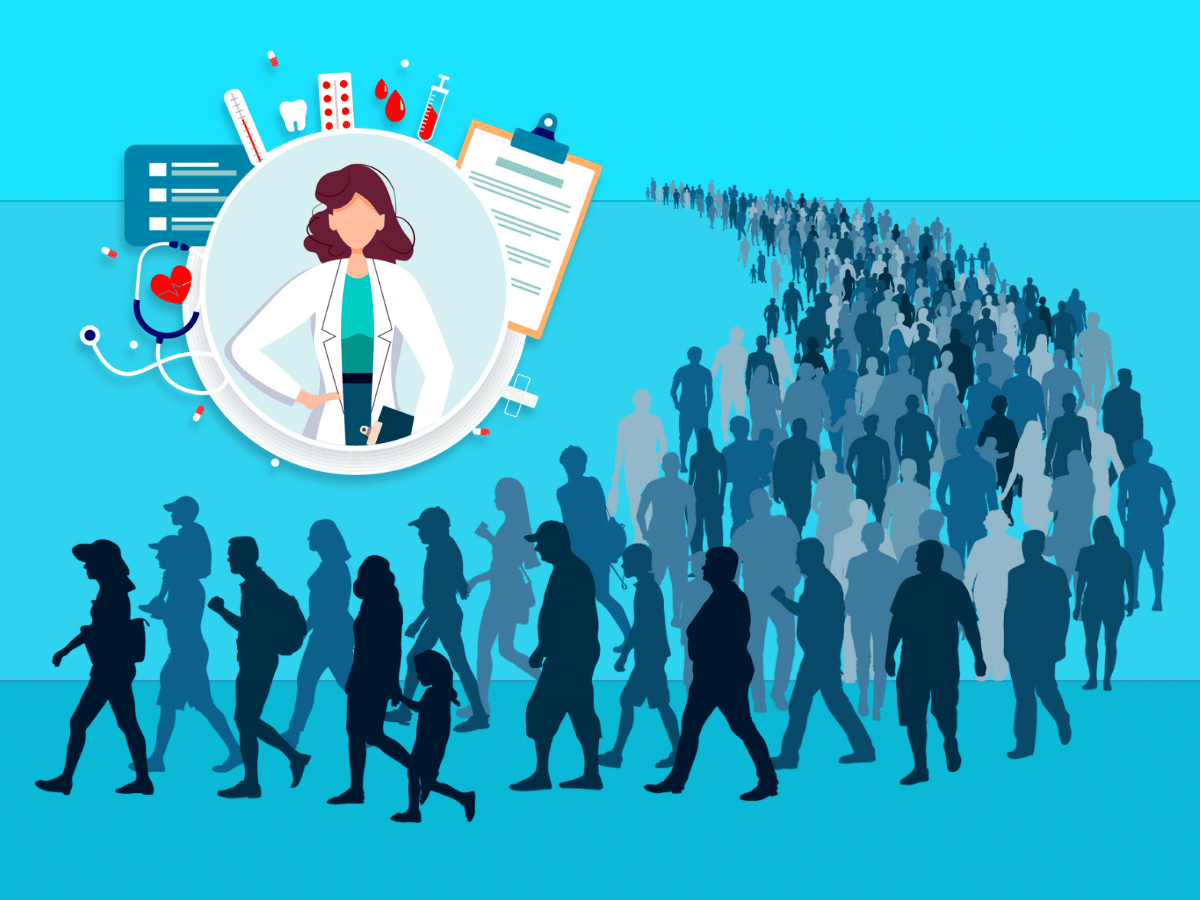
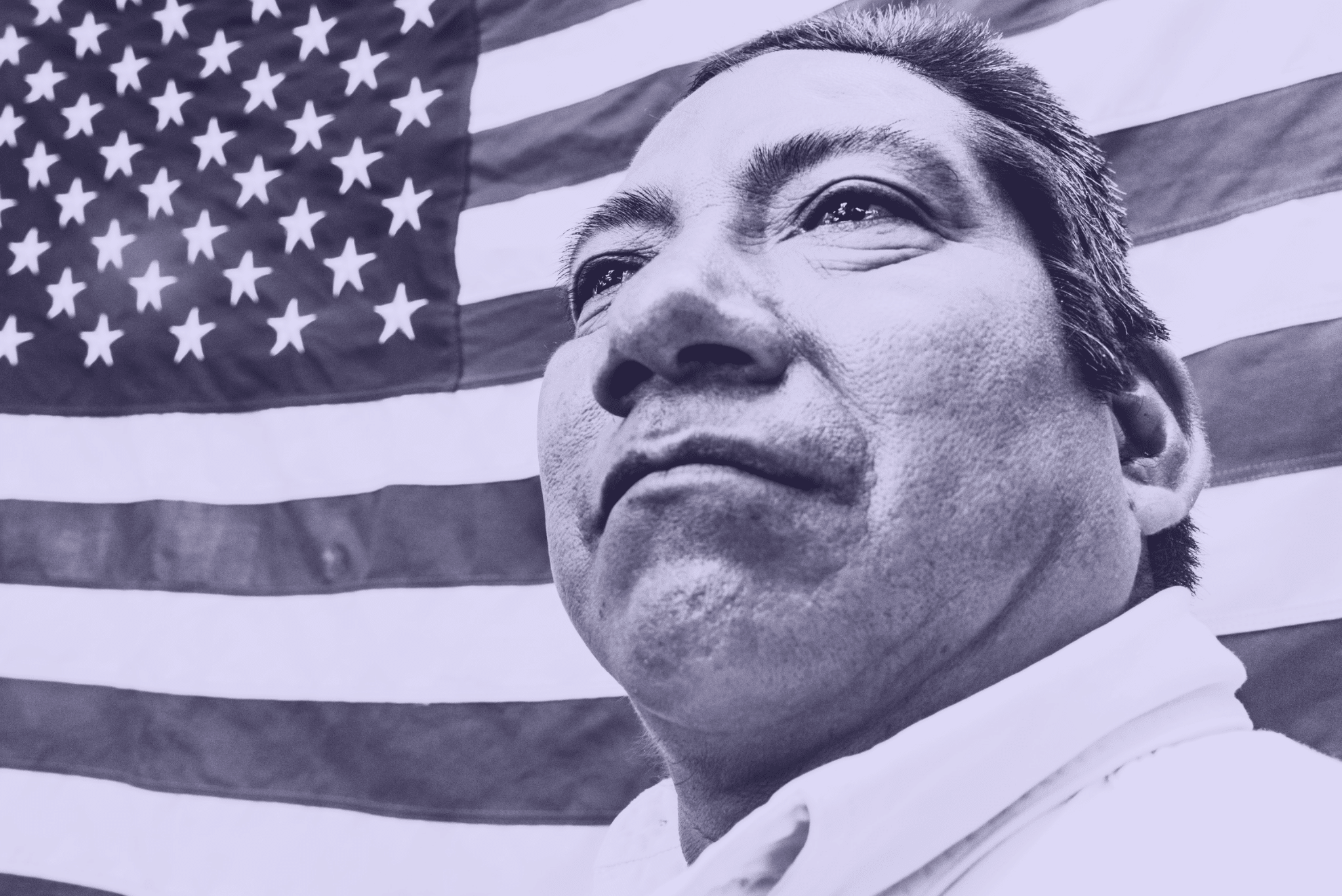
There are over forty-six million foreign-born residents in the United States, arriving predominantly from Latin America but, in fact, from all corners of the earth. All immigrants settle in communities where the common language of daily living is English. Speaking languages other than English presents challenges at every turn as they go about trying to become our neighbors and friends. Inability to access vital health services can be especially frustrating and even traumatic, even though physicians and nurses are committed to life-saving care for everyone in need.
In fact, our original Bill of Rights, the Fourteenth Amendment, the Civil Rights Act of 1964, and Section 1557 of the Affordable Care Act guarantee this access irrespective of language:
“Section 1557 provides that, except as otherwise provided in title I of the ACA, an individual shall not, on the grounds prohibited under title VI of the Civil Rights Act of 1964, title IX of the Education Amendments of 1972, the Age Discrimination Act of 1975, or section 504 of the Rehabilitation Act of 1973, be excluded from participation in, be denied the benefits of, or be subjected to discrimination under, any health program or activity, any part of which is receiving Federal financial assistance…” https://www.ecfr.gov/current/title-45/subtitle-A/subchapter-A/part-92
Nevertheless, notwithstanding this professional and legal commitment and mandate, language remains a major obstacle to equal access to healthcare and, for that matter, all social services in the U.S., particularly now, anti-immigration sentiment and aggressive deportation of recent arrivals are threatening their access to the social services on which they rely and to which they have a right. Our nation’s historic welcoming of immigrants is further undermined by the recent declaration of English as the nation’s ‘official language’ and by the elimination of English language education. The nation’s hospitals and community health centers cannot rely solely on English due to their ethical commitment and acknowledgment of the law.
This being said, quality and costs are abiding concerns for these medical services. Having a high-value ‘product’ of patients’ wellbeing that involves accelerating technology and specialization costs makes attention to ‘return on investment’ critical. Fortunately, this industry has a long-standing tradition of data collection in this area, thanks to support from internal as well as outside public and private sources.
A prominent example of rigorous data collection is Mass General Hospital/ Brigham and Women’s Hospital (MGB) efforts:
Massachusetts General Hospital is home to the largest hospital-based research enterprise in the U.S., with an annual budget of nearly $1.2 billion in 2021. The Mass General Research Institute comprises more than 9,500 researchers working across more than 30 institutes, centers, and departments.
As the oldest and largest teaching hospital of Harvard Medical School, Mass General has been a leader in bridging innovative science with highly advanced clinical care for more than 200 years. https://www.massgeneral.org/research/about/overview-of-the-research-institute
In recent years, MGB has established “Research and Innovation for Equitable Surgical Care” at the Center for Surgery and Public Health in the Department of Surgery, in association with the Harvard Medical School. Dr. Gezzer Ortega, MD, MPH, and Assistant Professor of Surgery, has been the Lead Faculty for this effort. Among other efforts, Dr. Ortega has been collaborating with Jeenie® to improve language concordance at MGB by researching the effect of Jeenie’s mobile app that gives patients accurate, immediate, and ubiquitous access to language services throughout the course of surgery, when and where it is needed.
The collaboration has helped produce a unique bibliography of studies on language ‘discordance/concordance’ in healthcare that offers insight into this abiding issue.
This dataset of approximately 800 published studies from 2008 to 2025 is unprecedented in its breadth and specification, providing information on author, title, journal name, date of publication, abstract, keywords, specialty, non-English involved, number of LEP, study years, region of study population, outcomes, intervention, and pdf.
- As a preliminary summary, Dr. Ortega (personal communication) compiled the following as a sample of potential results: 5% of malpractice cases come from miscommunication between patients and caregivers
- 60% of patients with LEP have short hospital stays and recurrences when interpreting services have been used
- 75% of patients with LEP receive more accurate diagnoses when interpreting is used
- As a result, when interpreting is used, patients with LEP are 40% more likely to adhere to their treatment / trust their physician
- When accessing interpreting directly on their own, as opposed to waiting for a caregiver, patients with LEP demonstrate an increased sense of empowerment and have stated they would have lower “no shows”
- Doctors spend an extra 10 to 30 minutes to initiate every interpreting session when they have to chase down a tablet on wheels, vs. using directly from the mobile phone in their pocket
- For most large HDNs, this could add up to $10s of Millions of dollars of wasted provider/surgeon time a year.
This summary is extraordinary in that it makes the case for the cost-effectiveness of language concordance, without which the justification for quality improvements is more difficult to make. Because of its importance and uniqueness, Dr. Ortega’s summary deserves to be rigorously documented and expanded, given the amount of data available in the database’s studies. Such research requires expertise and time that healthcare providers, on their own, can ill afford.
Accordingly, Jeenie® is pursuing a new partnership comprising Mass General Hospital Brigham and Women’s Hospital, the College of Information at the University of Maryland, the National Language Access Coalition, and the National Council on Interpreting in Health Care (NCIHC). Its immediate goal is the first rigorous assessment of the application, effectiveness, and cost of language in healthcare.
This partnership is rich in healthcare, language, accessibility, and data analysis expertise:
- The surgical center of BWH has long pursued data in support of quality and access, as indicated by the number and range of studies of its faculty: Dr. Ortega, the MGB lead in compiling this data set, serves as the Principal Investigator of a National Institute on Minority Health and Health Disparities (NIMHD) K23, and the BWH Center for Diversity and Inclusion Minority Faculty Career Development Award focused on improving outcomes for surgical patients with LEP.
- The mission of the University of Maryland’s College of Information Sciences is to “harness data and technology for social, economic, and environmental good.” Its faculty brings to the project relevant healthcare and technical expertise for examining quantitatively and qualitatively the impact of language services on clinical outcomes.
- The National Language Access Coalition comprises nearly 200 leaders from the private and public sectors, headed by a nationally recognized expert in language policy, Dr. Bill Rivers. Its goal is to advance language access across education and social services.
- The National Council on Interpreting in Health Care (NCIHC) has compiled a complementary database of studies dealing with language access in healthcare.
- Jeenie’s participation is part of its commitment to providing the most accurate and sensitive interpretation services through a combination of human and AI capabilities, as well as access to an unprecedented range of languages referred to as Technologically Low-Resourced Languages (TLRLs). Data development, collection, and analysis are a natural endeavor for a company to ensure quality, breadth, and access to healthcare.
It's a joint research effort that constitutes a unique partnership among a major hospital system, an established university information college, two independent national councils, and a private company.
Its purpose is to establish a scientific basis for healthcare institutions to assess their return on investment. Success will be defined by rigorous documentation of actual needs, outcomes, and costs for enhanced quality on a sustainable financial basis through unprecedented assessment of available industry-wide data. Documentation of both quality and cost is indispensable in today’s healthcare system.
References:
- The “Top Spoken Languages Across the United States and 2024 Migration Trends,” compiled by Jeenie®, is available at https://jeenie.com/hubfs/Geographic%20Language%20Map-v5.25.3.pdf

About Dr. Richard Brecht